

Quebec is introducing a new mandatory certification requirement for tree-trimming work starting in June 2026
Quebec is introducing a new mandatory certification requirement for tree-trimming work starting in June 2026
Starting June 8th, 2026, workers in the arboriculture and tree-trimming sector will be required to hold a mandatory certification to perform their duties. This measure aims to provide greater oversight of practices and enhance safety, particularly during work near electrical and telecommunications networks.
Under the new rules, workers will be able to obtain this certification either through recognition of their skills and experience or by completing an apprenticeship program leading to the qualification.
The Commission des normes, de l’équité, de la santé et de la sécurité du travail (CNESST) is currently supporting the development of specialized training for vegetation clearance work near power lines. This training, which will be mandatory once available, will supplement the arboriculture competency certificate.
Until it is implemented, workers required to work near power lines must already hold a certificate of competence in arboriculture. Employers will be responsible for ensuring that their employees receive adequate training, have the necessary protective equipment, and work under appropriate supervision, in accordance with the Occupational Health and Safety Act.
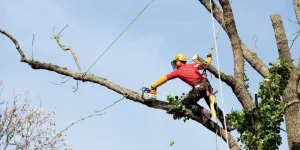
The work in question includes, in particular, pruning, trimming trees and shrubs, felling trees outside of forests (sometimes by dismantling), stump removal, chipping of debris, and bracing, i.e., the stabilization of weakened structures.
These operations are considered particularly high-risk when performed near electrical infrastructure.
However, certain operations will not be subject to this certification, including:
- stump removal using a hydraulic excavator
- the use of stationary shredders at facilities or recycling centers
- seasonal collection of green waste along roadsides and its shredding
This new requirement is part of an effort to reduce workplace accidents and improve safety during operations in urban areas and near critical infrastructure.
Authorities emphasize that prevention, training, and supervision remain essential to mitigating risks in this constantly evolving sector.