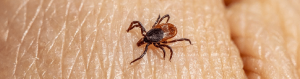
Spring is back—and so are ticks, appearing as soon as the snow melts. Tick presence is now well established in the Pontiac, where public health authorities consider the region to be endemic. The blacklegged tick, the main species of concern, is known to transmit Lyme disease.
According to public health data, the Outaouais is among the regions most affected in Quebec. The Pontiac, in particular, is one of the areas where tick populations are firmly established, with their presence observed in wooded areas and tall grasses.
Authorities estimate that the proportion of ticks infected with the bacteria responsible for Lyme disease can vary by location, reaching between 10% and 30% in some higher-risk areas. Across Quebec, the disease has been on the rise for several years, with a steady increase in human cases.
In the Outaouais, the incidence rate reached approximately 12 cases per 100,000 inhabitants in 2024, placing the region among the most affected in Quebec.
Experts attribute this increase in part to climate change, which is encouraging the northward expansion of suitable tick habitats, as well as to the growing presence of hosts such as deer and rodents.
Authorities emphasize that the risk to the public is real, but that simple preventive measures can help reduce it, including wearing protective clothing during outdoor activities and checking the body after spending time outside.